
 Español
 العربية
 Pусский

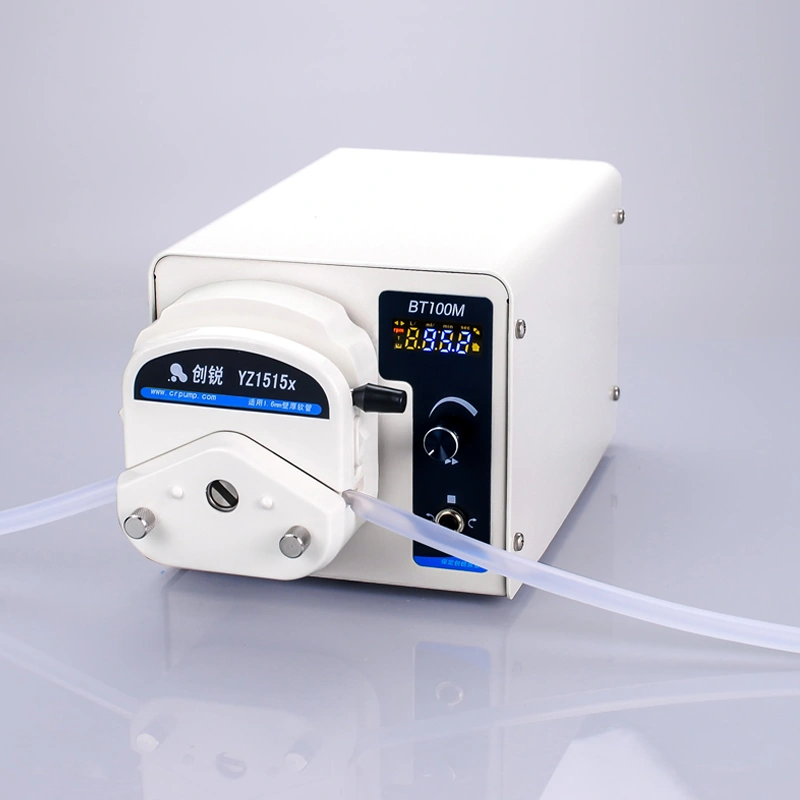
Because of the peristaltic pump’s strong practicability and wide range of application fields, in all walks of life fluid treatment has an outstanding performance, the most well-known application cases include water treatment, food packaging, chemical production, experimental research, and closely related to life preparation production and medical equipment.
During cardiac surgery, when the patient's heart and lungs stop working, clinical use of an artificial heart (blood pump) and artificial lung (oxygenator) instead of the normal heart and lung work, to maintain the patient and vital signs. The artificial heart-lung machine belongs to class ⅲ medical equipment. In clinical use, it is necessary to insert a cannula into the superior and inferior vena cava or right atrium of the patient to draw out the patient's blood. After temperature adjustment of the heat exchange tank, the patient's blood in the extratropical pipeline flows into the artificial lung to oxygenate the venous blood into arterial blood, which is then pumped into the arterial system by the artificial heart, so that the human tissues and organs are fully perfused and the stability of the patient's blood circulation and internal environment is maintained. In addition to maintaining vital signs, artificial heart-lung machines provide a blood-free field for heart surgery.
The peristaltic pump is used as the blood pump of the heart and lung machine because of its advantages of simple operation, hygiene, no cross-contamination, stable operation, accurate and safe liquid delivery. Artificial heart and lung machines usually have 4 to 5 peristaltic pumps, each pump has a clear function, among which the main pump is used to replace the ventricular stroke function. Other peristaltic pumps are used for blood return in the operation field, ventricular decompression and exhaust, and perfusion of cardiac arrest fluid. In a certain time of extracorporeal circulation, the peristaltic pump should be slightly destructive to the blood, the console operation is simple, with a backup emergency system.
During cardiac surgery, when the patient's heart and lungs stop working, clinical use of an artificial heart (blood pump) and artificial lung (oxygenator) instead of the normal heart and lung work, to maintain the patient and vital signs. The artificial heart-lung machine belongs to class ⅲ medical equipment. In clinical use, it is necessary to insert a cannula into the superior and inferior vena cava or right atrium of the patient to draw out the patient's blood. After temperature adjustment of the heat exchange tank, the patient's blood in the extratropical pipeline flows into the artificial lung to oxygenate the venous blood into arterial blood, which is then pumped into the arterial system by the artificial heart, so that the human tissues and organs are fully perfused and the stability of the patient's blood circulation and internal environment is maintained. In addition to maintaining vital signs, artificial heart-lung machines provide a blood-free field for heart surgery.
The peristaltic pump is used as the blood pump of the heart and lung machine because of its advantages of simple operation, hygiene, no cross-contamination, stable operation, accurate and safe liquid delivery. Artificial heart and lung machines usually have 4 to 5 peristaltic pumps, each pump has a clear function, among which the main pump is used to replace the ventricular stroke function. Other peristaltic pumps are used for blood return in the operation field, ventricular decompression and exhaust, and perfusion of cardiac arrest fluid. In a certain time of extracorporeal circulation, the peristaltic pump should be slightly destructive to the blood, the console operation is simple, with a backup emergency system.


